
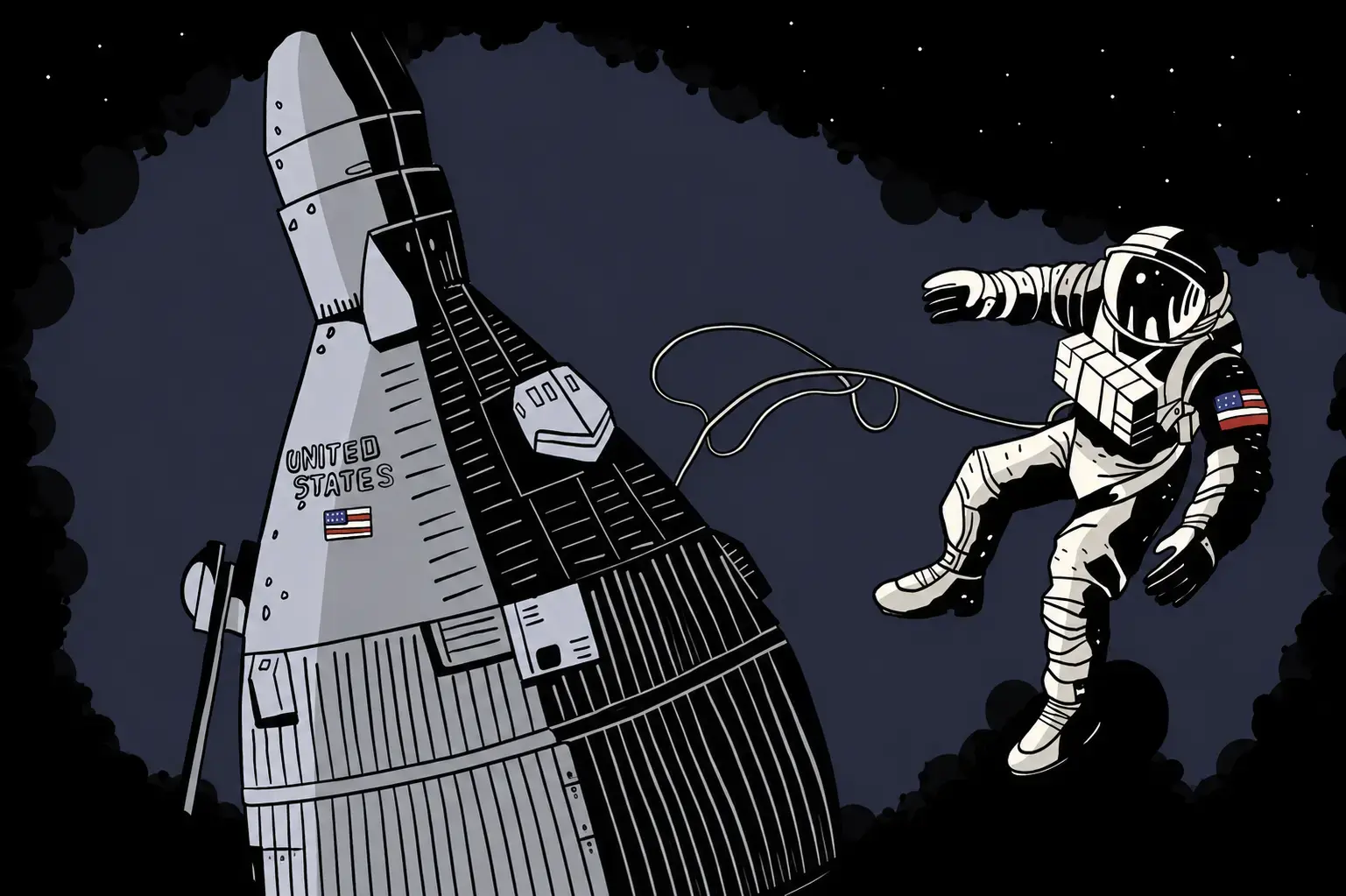
Astronaut floating in space near a spacecraft in orbit
INTERACTIVE VIDEO LESSON

The Weirdest Stuff Orbiting Earth: Space Junk

Video lesson + interactive tasks about orbital debris, why it’s dangerous, and how we can clean it up.

Level: B1–B2 Format: instant check

Stage 1

GLOSSARY

Before watching, review the words that will help you understand the video.

  • orbital debris — broken pieces of satellites and rockets that orbit Earth
  • space junk — unwanted human-made objects left in space (old satellites, rocket parts, fragments)
  • orbit — the path an object follows around a planet
  • satellite — a machine sent into space to travel around Earth
  • collision — when two objects crash into each other
  • Kessler syndrome — a chain reaction where crashes create more debris, causing even more crashes
  • re-entry — returning into Earth’s atmosphere from space
  • atmosphere — the layer of gases around Earth
  • defunct — no longer working or operating
  • lasers — powerful beams of light that can be used to push or move objects

Stage 2

PREDICTION

Using the new words, choose the most likely topic of the video.

1) What will the video most likely explain?

Stage 3

FIRST WATCH — Listening for Gist

Watch the video once. Do not pause the video. Focus on the general idea.

1) Choose the best summary of the video.

Stage 4

SECOND WATCH — Listening for Details

Watch the video again. Focus on details. You may pause if necessary.

True / False

1) Some pieces of space junk were left on the Moon during early missions.

2) Space debris moves so slowly that collisions are rare and harmless.

3) Even small debris can seriously damage a satellite.

4) Most debris burns up during re-entry, so falling space junk is usually not a big risk to people.

5) One proposed solution is using lasers to nudge debris into safer orbits or into the atmosphere.

Multiple Choice

1) Why is space debris a serious problem today?

2) What is the Kessler syndrome?

3) What can happen when two satellites collide?

4) What is “controlled re-entry” used for?

5) Which is an example of preventing satellites from becoming junk?

Stage 5

VOCABULARY PRACTICE

Task 1

Match the word and the picture

Tap a word, then tap an image. Listen and pronounce.

footprints
boots
tools
camera
satellite
rocket
laser
grain of sand
orbit
debris
footprints
boots
tools
camera
satellite
rocket
laser
grain of sand
orbit
debris

Task 2

Match the word and the definition

Tap a word, then tap the correct definition. Wrong answers won’t be placed.

Task 3

Fill in the gaps

Tap a word, then tap a gap. Wrong answers won’t be placed. Tap a filled gap to clear it.

Stage 6

FINAL VOCABULARY TEST (Score)

Complete the final test. Click Submit & Score.

© IrresistibleEnglish.ru
All rights reserved.