
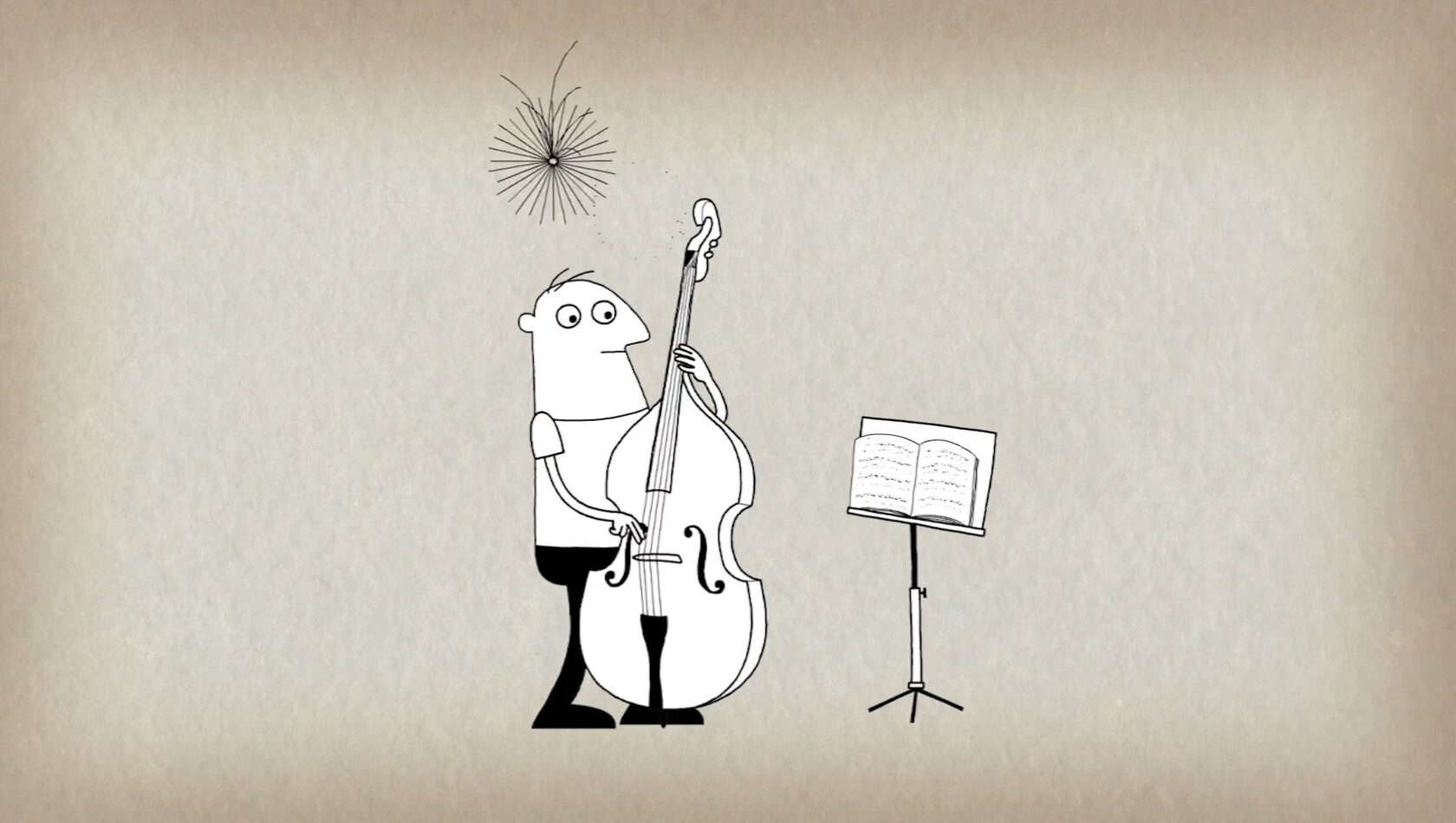
How playing an instrument benefits your brain
Video lesson + interactive tasks about how playing music engages your entire brain, improves memory, executive function, and more.
Stage 1
📖 GLOSSARY
Before watching, review the words that will help you understand the video. (Click any term to hear pronunciation)
- fireworks — (here) intense, simultaneous activity in the brain
- breakthrough — an important discovery or achievement
- monitor (verb) — to observe and track something over time
- fMRI — a machine that measures brain activity
- jubilee — a celebration; here — extremely high brain activity
- full-body workout — (here) engaging almost all areas of the brain at once
- fine motor skills — small, precise movements
- corpus callosum — the bridge between the left and right brain hemispheres
- executive function — mental skills including planning, strategizing, and attention
- tag (noun) — a label attached to a memory
- randomized study — a scientific experiment where participants are assigned to groups by chance
- orchestra — (here) a metaphor for the brain working together
Stage 2
PREDICTION
Using the new words, choose the most likely topic of the video.
1) What will the video most likely explain?
Stage 3
🎬 FIRST WATCH — Listening for Gist
Watch the video once. Do not pause. Focus on the general idea.
1) Choose the best summary of the video.
Stage 4
🔍 SECOND WATCH — Listening for Details
Watch the video again. Focus on details. You may pause if necessary.
✅ True / False
1) Listening to music causes only one area of the brain to light up.
2) Playing an instrument is like a full-body workout for the brain.
3) Playing music strengthens the corpus callosum, which connects the two hemispheres of the brain.
4) Musicians do not have better memory than non-musicians.
5) Randomized studies showed that music learning improved brain function compared to other activities.
📌 Multiple Choice
1) What happens in the brain when people listen to music?
2) Which brain areas are engaged when playing music?
3) What is the corpus callosum?
4) How do musicians' brains store memories differently?
5) According to the video, the benefits of playing music are...
Stage 5
📝 VOCABULARY PRACTICE
Task 1
🔗 Match the word and the definition
Tap a word, then tap the correct definition. Wrong answers will not be placed.
Task 2
📖 Fill in the gaps
Tap a word, then tap a gap. Wrong answers will not be placed. Tap a filled gap to clear it.
Task 3
🎯 Choose the right word
Choose the best word to complete each sentence.
1) An important scientific discovery is a ______.
2) To observe brain activity in real time means to ______ it.
3) Small, precise movements like playing the piano require ______.
4) The ability to plan, strategize, and pay attention is called ______.
Stage 6
🏆 FINAL VOCABULARY TEST
Complete the final test. Click Submit & Score.